Desk Decor Checklist for a Calm, Clutter-Free Workspace
A desk rarely becomes calm by accident. It happens when someone decides, once, what belongs there — and then keeps deciding it, in small ways, every week. The difference between a desk that looks styled and one that looks crowded is usually not the objects themselves. It is the number of them, the space between them, and whether each one is doing something for you or simply sitting there.
What follows is a working checklist rather than a shopping list. You can walk through it in an afternoon with what you already own, and come back to it whenever the surface starts creeping. The goal is not an empty desk. It is a desk where every item has a reason you could explain in one sentence.
Take a tape measure to your workspace first. Not because decor needs precision, but because most crowding problems are really space problems in disguise. Note the clear width between the monitor and the edge, the depth in front of the keyboard, and how much of the surface is left after your laptop, lamp and notebook are in place.
Two numbers matter more than the rest. Leave at least a hand's width — roughly ten to twelve centimetres — of clear surface directly in front of the keyboard, so your wrists rest on wood rather than on a stack of papers. And try to keep about a third of the whole desktop empty at any given time. That third is what makes a desk read as composed instead of busy, and it is the first thing to reclaim when things drift.
While you are down there, look at the cords. A single trailing cable can undo a carefully arranged corner. Route chargers along the back edge, gather loose leads with a clip or a velcro tie, and decide where the phone charges so the cable has a permanent home rather than a nightly tangle.
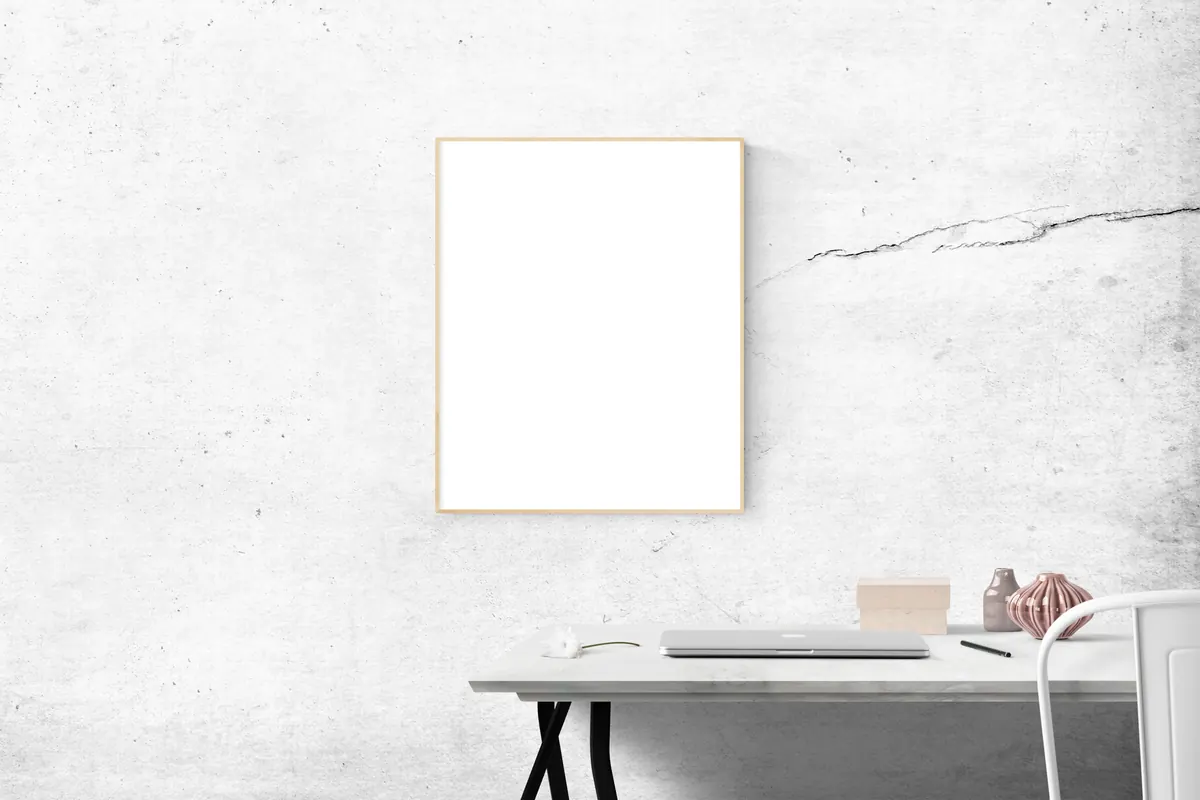
Every calm desk has a focal point: the object your eye lands on first. It might be a small lamp with a warm shade, a single framed print leaning against the wall, a stoneware vase, or a good desk clock. Pick that one thing deliberately and give it room. An anchor needs breathing space around it; crowded by four neighbours, it stops being an anchor and becomes inventory.
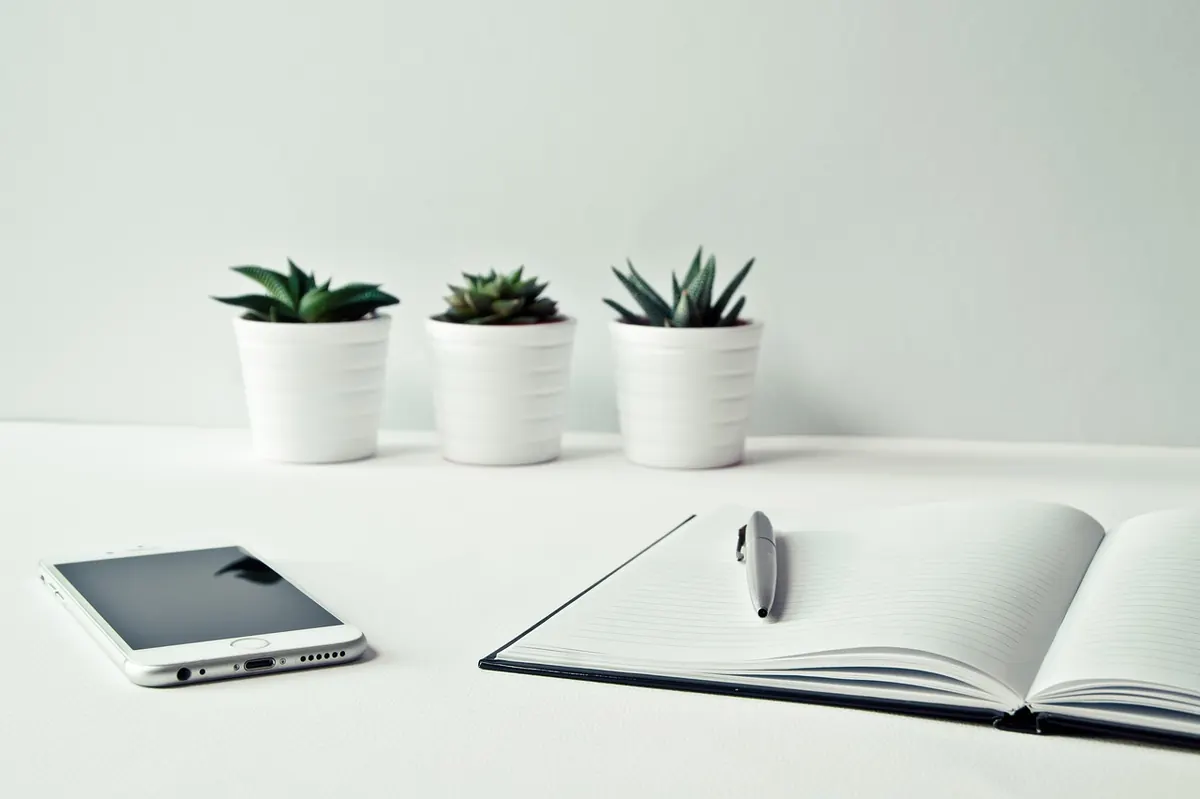
Then allow yourself two supporting pieces. A tray for keys and a pen cup. A small plant and a mug. Three groups in total, arranged so they do not line up like soldiers along the back edge. Once you get to six or seven objects, the eye has nowhere to rest and the desk starts to feel like a shelf.
Run through this list with the objects already on your desk. Anything that fails two or more points is a candidate for the drawer, the wall, or another room.
Calm comes more from colour than from style. Choose two or three tones and hold to them: warm neutrals with one dark accent, or off-white with pale wood and a single green. This is why a desk can look collected rather than chaotic even when the objects come from different places — the palette does the work of tying them together.
Matte finishes settle a surface. Glossy acrylic, mirrored trays and high-shine metal all bounce light and attention back at you. One piece of shine is fine, especially if it is a lamp base or a small dish; a full set of it is tiring by mid-afternoon. Mix textures instead of matching them: wood, ceramic, linen, uncoated paper, one metal object. A matching five-piece desk set tends to read as a shop display, whereas a wooden tray, a stoneware mug and a linen-covered notebook look like somebody's actual desk.
The desk top is the smallest part of your storage. Treat it as a stage, and the drawer and the wall as backstage.
Keep the things you need weekly but not constantly: spare pens, a staple-free clip tin, sticky notes, a ruler, charging cables, a lint roller. A shallow insert tray stops this from becoming a graveyard. The test is simple — if you reach for it less than once a day, it does not need to be visible.
One pinboard, one framed print, or one slim shelf, not all three above the same desk. Leave the space directly above your monitor clear so the first thing you see when you look up is empty wall; it gives your eyes somewhere to rest between tasks. If you use a pinboard, keep it curated, with a small number of pinned items rather than a paper drift.
Desks drift because things arrive faster than they leave. Set a gentle rule: one object in, one object out. When a new vase or print comes home, choose what it replaces and move that piece to a shelf elsewhere — or pass it on.
A rotation also stops your desk from going stale. Keep a small box of two or three alternate items in a cupboard — a different print, a heavier mug for winter, a second tray — and swap them at the change of season. It gives you the pleasure of a refresh without adding to the total. Fewer than ten minutes, twice a year.
Decor holds only as long as the weekly maintenance behind it. Set aside five minutes at the end of a working day: take any cups to the kitchen, return stray clips to the tray, put pens back in the cup, straighten the anchor piece so it sits square to the desk edge, and wipe the cleared third of the surface. Don't reorganise — just reset.
Then check one thing before you leave: is there an arm's width of clear wood in front of your chair? If yes, the desk is ready for tomorrow. If not, move the pile that has grown there to its drawer, its folder, or the bin. That single check keeps a decorated desk from becoming a decorated storage unit, and it is the quietest habit on this whole list.
Photo: Canvy Mockups / Pexels
Previous Post
7 Common Mistakes in Home Desk Setup and How to Fix Them
Next Post
Lined vs. Dot Grid vs. Blank Notebooks: Which Should You Buy?